

The Benefits from Service Differentiation: Two-echelon Distribution Network Design with Service Mode Selection
Mon, Jan 12, 2026
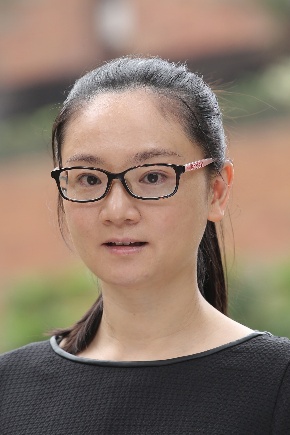
SPEAKER:Miao Song(宋苗), professor,Hong Kong Polytechnic University
TIME/DATE:2026.1.14 15:00
TENCENT:543 387 856
PW:570853
ABSTRACT:Classical distribution network design models typically assume exogenous demand and gross profit rate. In practice, however, both demand and profitability depend on various factors such as selling prices, delivery methods, after-sale terms, etc., which are often subject to choices, particularly for companies providing differentiated services. This paper studies the two-echelon distribution network design problem with service differentiation, which is captured by distinct service modes, each could represent any one or any combination of various factors having an impact on demand and profitability. The service modes selection is embedded in network design decisions to simultaneously locate distribution centers (DCs), assign DCs to selected retailers with particular service modes, and replenish inventory for both DCs and retailers, while maximizing the system-wide profit. This problem is formulated as a mixed integer program, which is nonlinear due to the two-echelon inventory replenishment and the impact of service mode selection on demand and profitability. We explore the submodularity of the nonlinear objective function and derive a linearized equivalent reformulation based on the extended polymatroid inequalities. To solve the polymatroid reformulation with exponentially many constraints, we employ a cutting plane approach. The corresponding separation problem is efficiently solved in polynomial time by a tailored algorithm utilizing the structure of its optimal solution. The efficiency of the proposed polymatroid cutting plane algorithm in solving large-size instances is validated in the numerical studies. Through comparisons with benchmarks and sensitivity analysis, the numerical results further demonstrate the benefits from service differentiation in our model and explore the trade-offs between higher and lower degrees of differentiation.
GUEST BIO:Prof. Miao Song got her PhD degree from MIT. She is currently a professor in the Department of Logistics and Maritime Studies at the Hong Kong Polytechnic University. Her research focuses on applications of optimization methods in operations management, particularly inventory optimization and supply chain network design problems. She has published in top journals such as Operations Research, Management Science, Production and Operations Management, and INFORMS Journal on Computing.
ADD:Tongji Building A, Siping Road 1500, SHANGHAI 200092
TEL:0086-21-65983943
FAX:0086-21-65986304
Quick Links:Tongji UniversityMMBSMBSCWRXLRI
We protect your privacy. We use cookies to personalize content, provide features, and analyze traffic to our website anonymously and in a privacy compliant manner. By law, we may store cookies on your device if they are strictly necessary for the operation of this site. For all other cookie types, we need your permission. For more information, please see the privacy policy linked below.

