

When Moderation Spills Over: The Double-Edged Effects on User-Generated Content
Thu, Jun 04, 2026
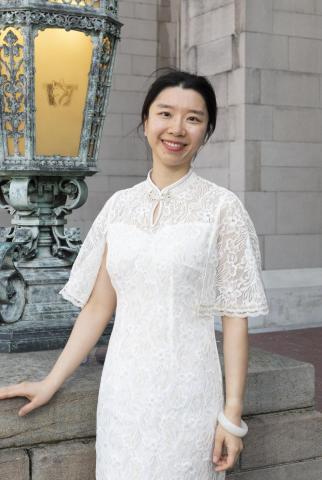
SPEAKER: Luna Zhang(张星玥),Associate Professor,University of Washington Tacoma.
TIME/DATE: 2026.6.15 14:00
CLASSROOM: A308
ABSTRACT:
Social media moderation encompasses platform actions intended to enforce community norms and mitigate harmful behaviors online. While prior research has primarily focused on the direct effects of moderation on moderated content and its creators, limited attention has been paid to the potential spillover effects of moderation on unmoderated content. In this study, we exploit a temporary shutdown of the commenting function on a large social Q&A platform, during which the platform conducted opaque comment moderation, to investigate the spillover effects of comment moderation on subsequent answer generation. Using a differences-in-differences approach combined with propensity score matching, we find that comment moderation significantly decreases the volume of subsequent answers, particularly regular answers rather than harmful answers. Meanwhile, moderation surprisingly improves the helpfulness of subsequent answers. Mechanism analyses reveal that these effects are more pronounced for opinion-oriented and highly popular questions than for professional-oriented and niche questions. Further analyses show that moderation leads to longer, more concrete, and more similar answers. We interpret these findings through the lenses of chilling effects and loss aversion among content contributors on the supply side. On the demand side, moderation reduces users’ incentives to consume platform content, which in turn dampens subsequent answer generation. Our findings suggest that well-intended moderation may unintentionally suppress user participation and content contribution yet improve the helpfulness of user-generated content, highlighting important trade-offs in platform governance and content moderation practices.
GUEST BIO:
Dr. Luna Zhang’s research interests include Consumer Behavior, Mobile Commerce, Platform Economy, Revenue Sharing, Business Analytics, Large Scale Data Analysis, and Information Systems and Operations Management Interface. Dr. Zhang’s current project focuses on consumer search and purchase in mobile commerce and revenue sharing in the platform economy. Her research has appeared in top academic journals such as Management Science, Production and Operations Management, and Information & Management.
She won the best paper award at the Conference on Information Systems & Technology (CIST) 2021. She received the Distinguished Research Award 2023 and 2020 Student’s Choice Voting: Outstanding Faculty Award at the University of Washington Tacoma. She led the Analytics Innovation (A.I.) student club as a faculty advisor to winning the 2020 INFORMS Student Chapter Annual Award, Cum Laude. The women’s football club, Seattle Reign FC celebrated her as OL Reign & Starbucks Legend.
Dr. Zhang previously taught Introduction to Information Systems, Demand and Supply Chain Planning, and Money, Banking, and Financial Markets at Lehigh University. She teaches various topics in analytics and operations management for undergraduate, Master of Sciences in Business Analytics (MSBA), and MBA programs.
ADD:Tongji Building A, Siping Road 1500, SHANGHAI 200092
TEL:0086-21-65983943
FAX:0086-21-65986304
Quick Links:Tongji UniversityMMBSMBSCWRXLRI
We protect your privacy. We use cookies to personalize content, provide features, and analyze traffic to our website anonymously and in a privacy compliant manner. By law, we may store cookies on your device if they are strictly necessary for the operation of this site. For all other cookie types, we need your permission. For more information, please see the privacy policy linked below.

