

Liu Xinghua: Building an Industrial Cooperation Community between the Hainan Free Trade Port and the Guangdong-Hong Kong-Macao Greater Bay Area
Tue, Jun 16, 2026
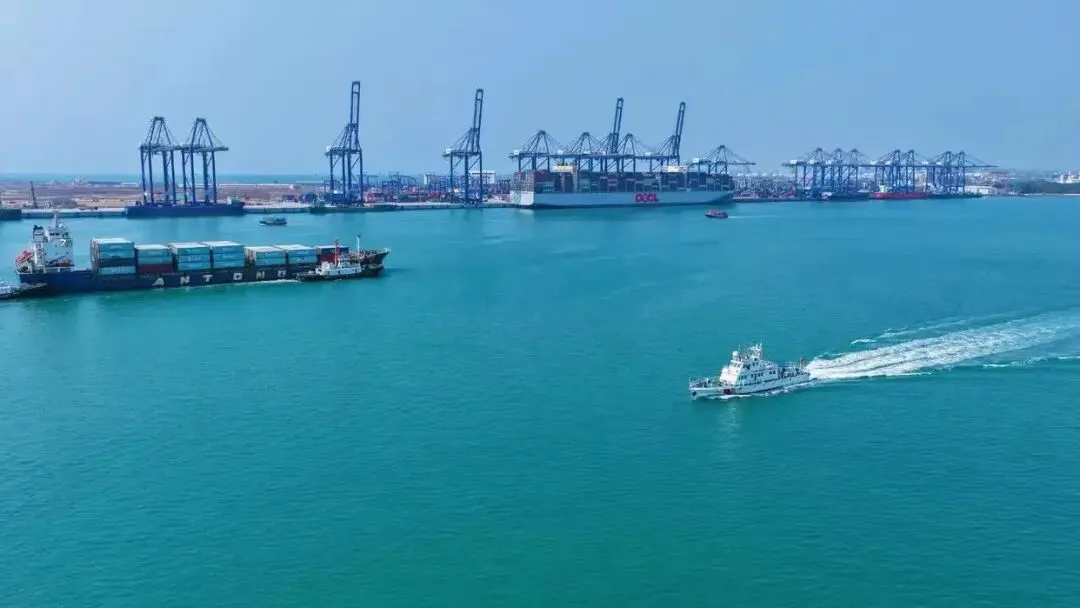
Hainan Free Trade Port and the Guangdong-Hong Kong-Macao Greater Bay Area stand as two major strategic regions for China’s reform, opening up and high-quality development. As a vital gateway, Hainan Free Trade Port aligns itself with global high-standard economic and trade rules and spearheads China’s opening-up drive in the new era. The Guangdong-Hong Kong-Macao Greater Bay Area serves as a strategic pillar for fostering a new development paradigm, a demonstration zone for high-quality development and a pacesetter for advancing Chinese modernization. Following the official launch of island-wide customs closure in Hainan, the interplay of the two national strategies has created tremendous opportunities for in-depth industrial cooperation between the two regions. Building an industrial cooperation community featuring complementary strengths, differentiated development, value co-creation and benefit sharing has become a shared goal for both sides to achieve high-level opening-up and high-quality growth.
Unique Strengths for Industrial Cooperation
Hainan Free Trade Port boasts distinctive policy and geographical advantages.
First, its tax and value-added processing policies deliver notable cost reductions. The combination of zero tariffs, low tax rates, a streamlined tax system, the dual 15% preferential income tax rates, and tariff exemptions for products with over 30% processing value added holds strong appeal for export-oriented enterprises and high-caliber professionals.
Second, policies on high-end bonded maintenance and remanufacturing facilitate domestic and overseas circulation. The “two ends outside” model boosts advanced manufacturing and producer services.
Third, policies concerning ship registration at Yangpu Port of China and air rights opening have reshaped the shipping landscape. Enjoying a full range of preferential tax policies for vessels, Hainan is the only provincial pilot in China granted the opening of the 3rd, 4th, 5th, and 7th freedoms of the air. This enables closer coordination between port clusters of the two regions and helps open up global logistics routes.
Fourth, Hainan has rolled out the country’s first provincial negative list for cross-border data flows, simplifying compliance procedures for non-sensitive data and facilitating cross-border data transmission for enterprises.
Fifth, the commitment-based market access system is applied to sectors subject to mandatory standards, which greatly cuts institutional transaction costs for Greater Bay Area enterprises expanding across regions.
The Guangdong-Hong Kong-Macao Greater Bay Area possesses comprehensive strengths for industrial development. It boasts robust economic strength, ranking among the world’s top bay areas in economic scale. The region is abundant in scientific, educational and talent resources, home to numerous universities, researchers and professionals proficient in international rules. It also hosts a highly dynamic capital market anchored by the Shenzhen and Hong Kong stock exchanges. With a large number of investment institutions and massive fund scale, the area can provide ample equity investment and innovation capital.
The Greater Bay Area excels in scientific, technological and industrial innovation. Its tech cluster consistently ranks among the world’s top echelons, supported by robust R&D investment. The region accounts for a large share of China’s granted invention patents and international patent applications, and takes the lead nationwide in emerging sectors representing new productive forces, including new energy vehicles, low-altitude economy and artificial intelligence. Covering all industrial categories classified by the United Nations, the Greater Bay Area has cultivated multiple trillion-yuan advanced manufacturing clusters. It is home to a large number of high-tech enterprises, specialized, sophisticated, unique and innovative enterprises, underpinned by a complete manufacturing base and sound digital supply chain network.
The two regions are highly complementary in strengths. They can further deepen cooperation models: R&D in the Greater Bay Area paired with industrial transformation in Hainan, regional headquarters based in the Greater Bay Area with production bases located in Hainan, capital from the Greater Bay Area leveraging Hainan’s policies, and talents from the Greater Bay Area benefiting from Hainan’s preferential individual income tax policies. Such collaboration optimizes resource allocation and underpins the development of China’s new development paradigm.
Progress and Major Challenges in Industrial Cooperation
Initial progress has been made in industrial cooperation between Hainan Free Trade Port and the Guangdong-Hong Kong-Macao Greater Bay Area. Hainan has steadily increased investment inflows from Hong Kong. The enclave economy model has been piloted, with a host of industrial projects and cooperation parks put into operation. Cooperation mechanisms covering value-added processing, port and shipping logistics and cross-regional rule coordination have taken shape. Meanwhile, cross-provincial government service delivery and credit cooperation continue to move forward.
Nevertheless, the cooperation still faces profound structural constraints.
Firstly, disparities in institutional opening-up have created barriers to factor flow. Inconsistent rules governing cross-border capital and data flows push up compliance costs and expenses arising from institutional adaptation.
Secondly, industrial cooperation remains at the stage of scattered project agglomeration, with no sound industrial cluster effect created, and a lack of mechanisms to drive the full-scale relocation and cultivation of industrial chains led by core enterprises.
Thirdly, a cross-regional benefit-sharing mechanism is yet to be established. No institutional arrangements have been put in place for output value statistics, tax revenue distribution and land quota allocation. Inadequate infrastructure support in some parts of Hainan also hinders the relocation of high-quality production capacity.
Fourthly, weaknesses remain in judicial coordination and rule alignment. Differences across legal regimes bring uncertainties in judicial proceedings, arbitration and law application, undermining enterprises’ confidence in long-term investment.
Key Cooperation Areas and Implementation Approaches for Building an Industrial Cooperation Community
Focusing on fostering new productive forces, the two regions will leverage their respective strengths to realize precise industrial chain docking, with priority given to four major cooperation areas. In biomedicine, a development model will be established featuring R&D in the Greater Bay Area, clinical trials and manufacturing in Hainan, and market expansion both domestically and internationally. In high-end equipment, a service chain will be developed covering overseas procurement, bonded maintenance in Hainan and global delivery. In the green energy sector, an industrial layout will be formed with R&D conducted in the Greater Bay Area, product assembly in Hainan and market focus on ASEAN countries. For agricultural products and high-end food, the two sides will tap into Hainan’s duty-free raw material imports and the Greater Bay Area’s sophisticated deep processing technologies to expand the domestic market.
The two regions will integrate port, shipping and air logistics resources to build a comprehensive international logistics hub. Efforts will be made to develop cross-border data channels and build a data service hub targeting ASEAN countries. They will further advance institutional opening-up in producer services, align with global high-standard economic and trade rules, and promote rule convergence in finance, intellectual property, ESG and commercial arbitration. Domestically, the two sides will jointly develop duty-free consumption and cross-border e-commerce. Internationally, they will fully leverage RCEP rules and Hainan Free Trade Port policies to build cross-border industrial chains serving ASEAN markets.
Policy Recommendations for Building an Industrial Cooperation Community
First, innovate institutional mechanisms and establish cross-provincial benefit-sharing systems as well as trading mechanisms for energy consumption and carbon emission quotas to break down local institutional barriers.
Second, remove bottlenecks restricting factor flow, and improve policies governing cross-border capital flows, cross-border data transmission, mutual recognition of professional qualifications , and tax incentives to ease the burden on high-caliber talent.
Third, refine rules for industrial coordination, improve industrial access guidelines and criteria for judging processing value added, and build a full-process traceability system to avoid homogeneous competition.
Fourth, strengthen judicial coordination by setting up foreign-related civil and commercial courts, joint arbitration centers and collaborative platforms for intellectual property protection to provide solid legal safeguards.
Fifth, explore new investment and financing models for infrastructure development, and encourage capital and technologies from the Greater Bay Area to participate in the construction of new-type and digital infrastructure in Hainan Free Trade Port.
Sixth, upgrade the comprehensive transportation network, advance connectivity across the Qiongzhou Strait and multi-modal transport, and strengthen the functions of international transit and supply chain allocation.
Conclusion
The industrial cooperation between the two regions is far more than a simple physical combination; it delivers coordinated development that achieves synergy greater than the sum of individual parts. Advancing industrial spatial restructuring, improving factor efficiency and promoting institutional opening-up will not only address homogeneous regional competition, but also facilitate the smooth operation of domestic and international dual circulation and enhance the resilience of industrial and supply chains. It will provide strong support for fostering a new development paradigm and exploring a new model of open economy for Chinese modernization.
(Source: Hainan Today, Issue 4, 2026)
ADD:Tongji Building A, Siping Road 1500, SHANGHAI 200092
TEL:0086-21-65983943
FAX:0086-21-65986304
Quick Links:Tongji UniversityMMBSMBSCWRXLRI

We protect your privacy. We use cookies to personalize content, provide features, and analyze traffic to our website anonymously and in a privacy compliant manner. By law, we may store cookies on your device if they are strictly necessary for the operation of this site. For all other cookie types, we need your permission. For more information, please see the privacy policy linked below.

