

Working Smarter, Not Longer, When Time is Limited: Work-Hour Restrictions, Pay-for-Performance, and Firm-Level Productivity
Mon, Sep 07, 2026
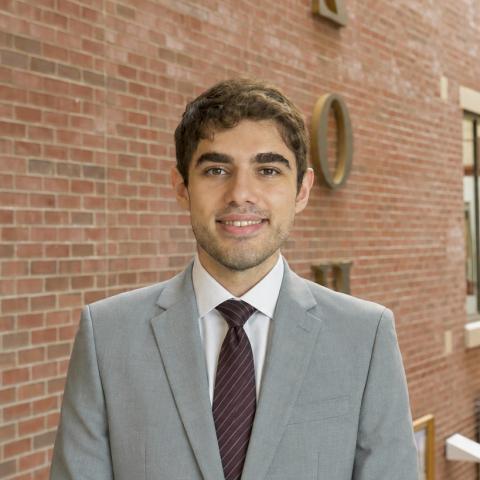
Speaker: Cyrus Khalvati (Ph.D. candidate in Management, University of Missouri‑Columbia)
Date & Time: Wednesday, 23 September 2026, from 14:00 to 15:30 AM (Beijing Time)
Location: Tongji Building A2101
ABSTRACT
Work-hour restriction policies are increasingly adopted worldwide to improve employee well-being, yet their productivity consequences remain contested. I argue that the firm-level productivity effects of such policies depend critically on how employees adapt when effort duration is externally constrained. Drawing on the valence–instrumentality–expectancy (VIE) framework of expectancy theory, I conceptualize work-hour restrictions as disrupting employees’ expectancy beliefs by constraining a familiar duration-based pathway to performance. Preserving productivity therefore depends on employees’ willingness to redirect effort toward intensity—a cognitively and behaviorally demanding adjustment. I propose that pay-for-performance (PFP) systems condition firms’ capacity to make this transition by strengthening employees’ instrumentality perceptions that performance achieved under constrained hours will be rewarded, whereas higher base pay increases the valence of pursuing performance-contingent rewards by reducing income risk. Using 1,498 firm-year and 130,010 employee-year observations from 2015 to 2019, I analyze the impact of South Korea’s 2018 work-hour restriction policy. Consistent with my theory, I find that the policy is associated with a decline in productivity. However, this negative effect is attenuated in firms with higher PFP intensity. This buffering effect is stronger in firms with higher base pay. I contribute to the work-hour literature by explaining why firms differ in their productivity responses to work-hour restrictions and to the compensation literature by demonstrating how PFP and base pay shape employees’ adaptation to time constraints. More broadly, I demonstrate that under work-hour restrictions, incentive systems do not merely motivate effort but enable organizational adaptation by reshaping how employees deploy effort under constraints.
GUEST BIO
Cyrus Khalvati is a Ph.D. candidate in Management at the University of Missouri. His research interests are situated within strategic human resource management. In particular, he examines how firms adapt their human resource systems and human capital decisions in response to changing organizational and environmental conditions, and how these adaptations shape outcomes for firms and employees. His work has been invited for revision at the Journal of Applied Psychology and Personnel Psychology. Born and raised in Vancouver, Canada, Cyrus completed his undergraduate and graduate studies in Canada and the United Kingdom before beginning his doctoral studies at the University of Missouri.
ADD:Tongji Building A, Siping Road 1500, SHANGHAI 200092
TEL:0086-21-65983943
FAX:0086-21-65986304
Quick Links:Tongji UniversityMMBSMBSCWRXLRI

We protect your privacy. We use cookies to personalize content, provide features, and analyze traffic to our website anonymously and in a privacy compliant manner. By law, we may store cookies on your device if they are strictly necessary for the operation of this site. For all other cookie types, we need your permission. For more information, please see the privacy policy linked below.

